
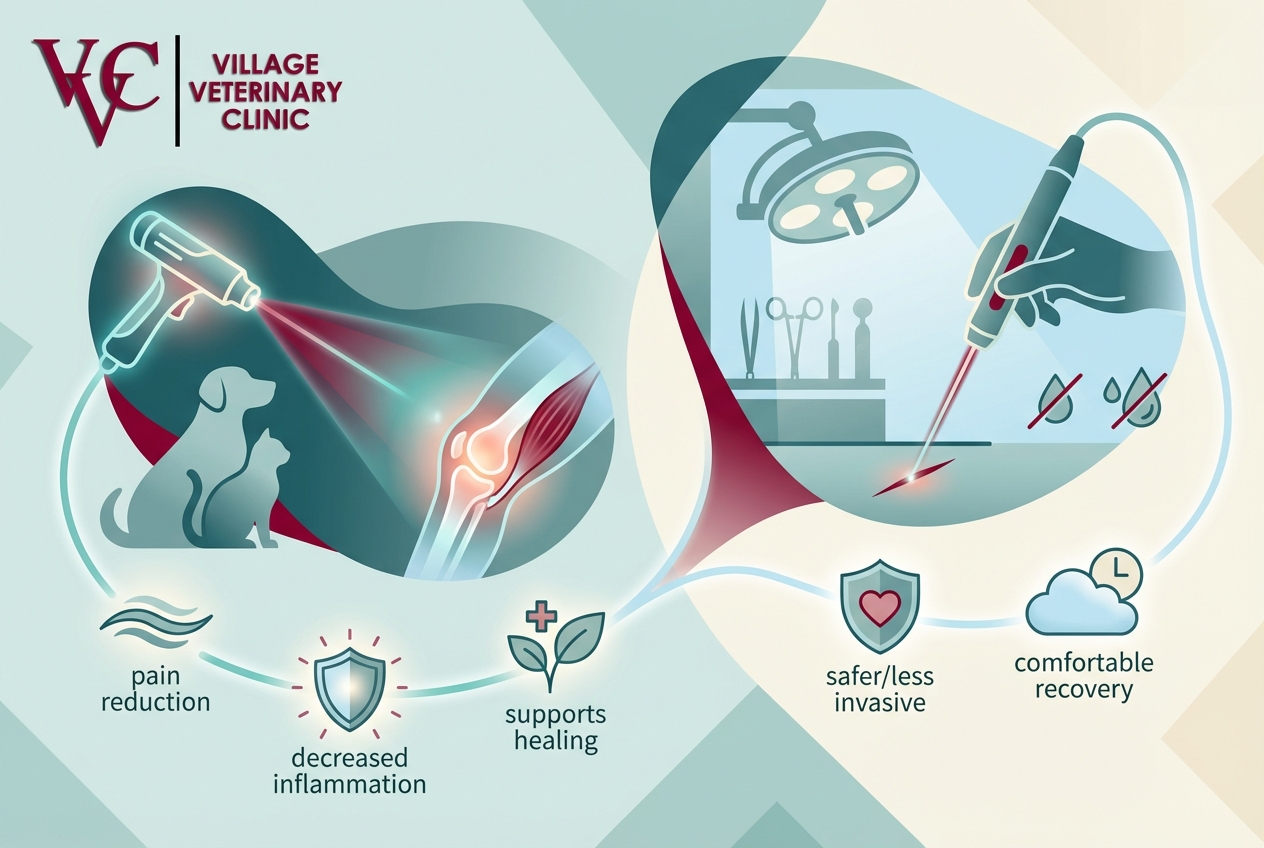
At Village Veterinary Clinic, we’re proud to offer veterinary laser therapy as a modern, non-invasive option that may help reduce pain, decrease inflammation, and support healing for dogs and cats.
We also use laser technology in certain procedures as part of our surgical capabilities. In many cases, laser procedures can help reduce bleeding and swelling, which may make surgery safer and less invasive—and may support a more comfortable recovery.
If you’re unsure whether laser therapy is a fit for your pet’s condition, our team is happy to help. Please contact us or call (713) 468-7955 to talk through your pet’s symptoms, history, and next steps.
Ready to get started? You can also request a visit through our appointments page.
What Is Veterinary Laser Therapy?
Laser therapy (also called therapeutic laser) uses focused light energy applied to targeted areas of the body. The goal is to support your pet’s natural healing processes—often by helping manage inflammation and discomfort while encouraging tissue repair.
Because laser therapy is non-invasive and does not involve incisions, it’s commonly used as part of a broader care plan for pets who are recovering from injury, managing chronic conditions, or healing after a procedure.
Laser therapy is often just one piece of a complete plan. Depending on your pet’s needs, we may also recommend a thorough exam and diagnostics (such as digital radiology or ultrasound) to better understand what’s going on and guide treatment.
Benefits of Laser Therapy for Dogs & Cats
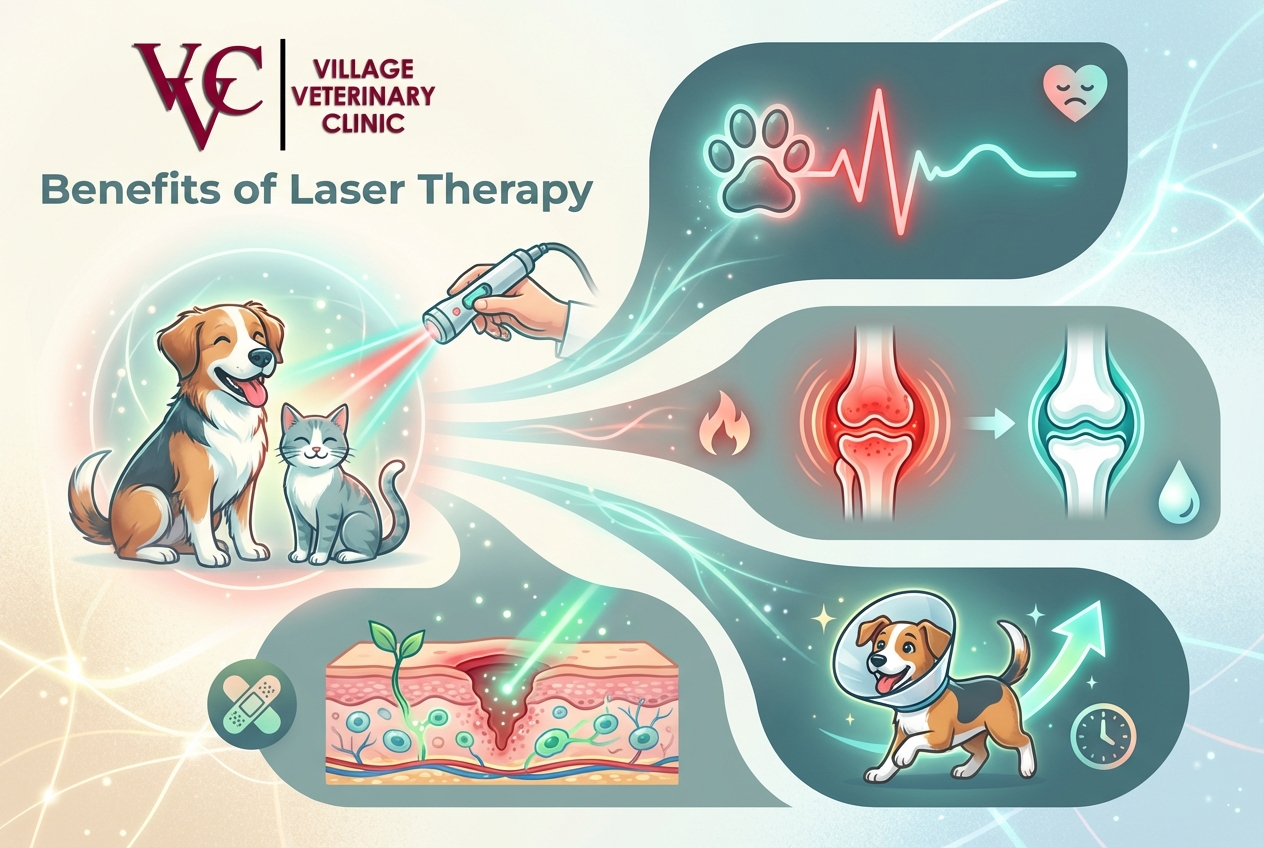
Every patient is different, but veterinary laser therapy is commonly recommended because it may help:
- Reduce pain and discomfort (especially for pets dealing with mobility issues)
- Decrease inflammation in injured or irritated tissues
- Support healing for certain soft tissue injuries and wounds
- Improve recovery comfort after some procedures
If your pet is dealing with ongoing discomfort, we can also discuss broader options on our pain management page, including how laser therapy may fit into a long-term comfort plan.
For pets in later life stages, laser therapy may be especially helpful when paired with routine checkups and monitoring through our senior care services.
Common Reasons a Veterinarian May Recommend Laser Therapy
Laser therapy can be used for a wide variety of conditions. After your pet’s exam, our veterinarians may recommend laser therapy for concerns such as:
- Arthritis or joint stiffness (comfort and mobility support)
- Sprains, strains, and soft tissue injuries
- Post-operative recovery support (comfort and healing)
- Wounds or skin irritation (as appropriate for the case)
- General inflammation related to injury or overuse
If your pet has an active limp, swelling, or a new injury, we may recommend an exam first to determine whether X-rays or other diagnostics are needed before starting therapy.
If your pet needs to be seen quickly, we also offer urgent care during business hours via work-in appointments. If you believe your pet is experiencing a true emergency, please review our emergency information page for guidance.
What to Expect During a Laser Therapy Appointment
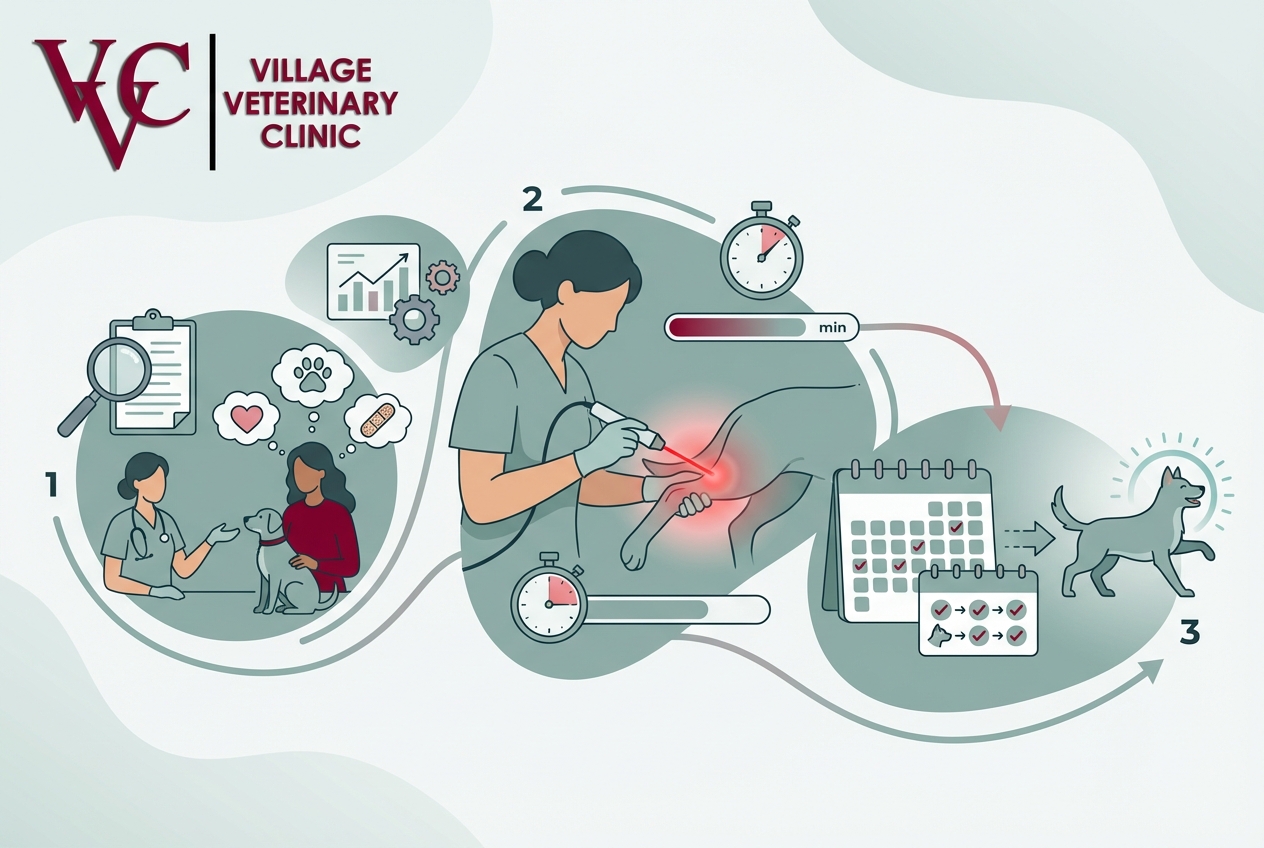
We aim to keep laser therapy visits calm and low-stress. Here’s a general idea of what you can expect:
- Step 1: Exam & plan. We’ll review your pet’s history, symptoms, and goals (comfort, mobility, healing, etc.).
- Step 2: Targeted treatment. The laser is applied to the recommended areas for a set amount of time.
- Step 3: Follow-up schedule. Many conditions respond best with a series of sessions, especially early in the plan.
Some pets relax during treatment, and many tolerate it very well. Your veterinarian will guide you on how often to come in, what changes to watch for at home, and when to recheck progress.
To schedule, please call (713) 468-7955 or request a visit through our online appointment request page.
Laser Surgery (When Appropriate)
In addition to therapeutic laser treatments, laser technology can be used in certain surgical procedures. Laser procedures may help reduce bleeding and swelling compared to some traditional approaches, and they can be a useful option in the right situation.
If your pet needs a procedure, you can learn more about our approach on our surgery page, as well as our soft tissue and orthopedic surgery services. Our team will talk you through recommendations, preparation, and what to expect during recovery.
For recovery, we may recommend supportive care options—such as laser therapy and other comfort strategies—based on your pet’s specific needs and procedure type.
Supporting Healing at Home
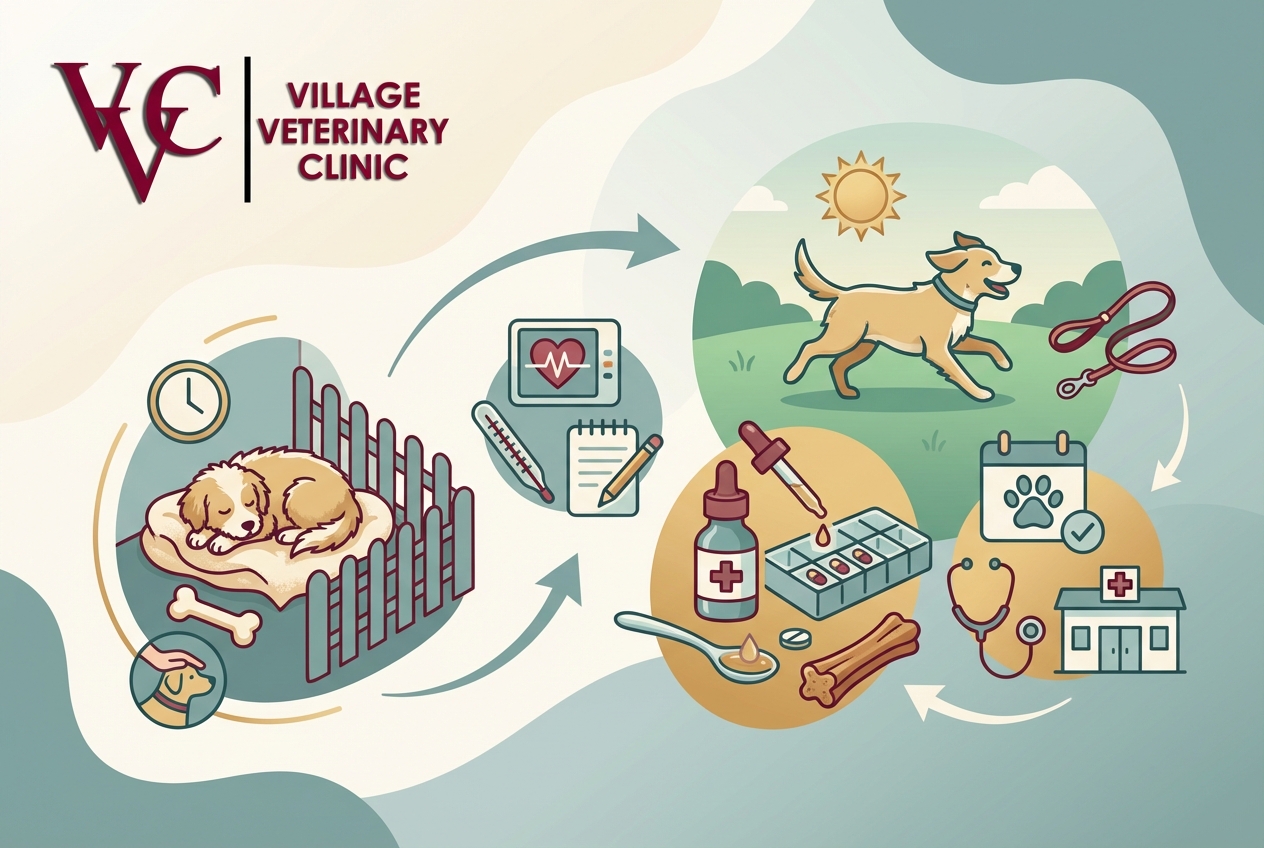
Your pet’s recovery doesn’t end when you leave the hospital. Depending on your pet’s diagnosis, your veterinarian may recommend a combination of:
- Activity restrictions and a gradual return to normal routines
- At-home comfort strategies and monitoring
- Medications or supplements (when appropriate)
- Follow-up visits to track progress
If medications are part of your pet’s plan, our fully stocked pharmacy can help you leave with what you need—without extra stops.
For puppies and kittens, early care can help prevent issues before they start—visit our puppy and kitten care page to learn more about setting a strong foundation.
FAQs About Laser Therapy for Pets
Is laser therapy painful for pets?
Laser therapy is non-invasive. Most pets tolerate it well. Your veterinarian will discuss what your pet is likely to feel and how we help keep treatment calm and comfortable.
How many laser therapy sessions will my pet need?
It depends on your pet’s condition, how long symptoms have been present, and the treatment goal. Some patients benefit from a short series of treatments, while chronic conditions may do best with periodic maintenance.
Can laser therapy be used with pain medications?
Yes, laser therapy is commonly used alongside other approaches. If your pet needs a broader comfort plan, please visit our pain management page or call (713) 468-7955 to discuss options.
Can laser therapy help after surgery?
In some cases, laser therapy may be recommended to support comfort and healing during recovery. If your pet is scheduled for a procedure, learn more about what to expect on our surgery page.
Do I need an exam before starting laser therapy?
Often, yes. An exam helps us determine whether laser therapy is appropriate and whether diagnostics (like digital radiology) are needed to guide a safe plan.
How do I schedule laser therapy at Village Veterinary Clinic?
Call (713) 468-7955, contact us, or request a visit through our appointments page.
New Clients & Helpful Resources
If you’re new to Village Veterinary Clinic, we look forward to meeting you. Please visit our new clients page and explore our online forms to save time before your visit.
Want helpful updates without extra phone calls? Ask us about text reminders.
We also welcome all visitors and are committed to access for everyone—learn more on our accessibility page.
For additional hospital information, you can browse our about us page, meet our doctors and staff on the our team page, or view our full list of veterinary services (including vaccinations, wellness exams, parasite prevention, nutritional counseling, and microchipping).
If you’d like to read our clinic guidance related to safety and operations, you can also visit our COVID resource page: How to Protect Yourself and Your Pets From COVID-19.
Visit Village Veterinary Clinic
Village Veterinary Clinic is located at 8785 Gaylord Dr, Houston, TX 77024.
To ask whether laser therapy may be right for your pet—or to schedule an appointment—please contact us or call (713) 468-7955. You can also request a visit through our appointments page.
If your pet needs end-of-life support, we also provide compassionate care through our hospice and euthanasia services.